
The kitchen was filled with a waft of tantalizing spices as I stirred my pot, taking a moment to admire the rich colors simmering before me. I was transforming leftover beef bulgogi into a comforting bowl of Korean Beef Bulgogi Stew with Sweet Potato Glass Noodles—a quick dinner idea that is the epitome of warmth and flavor. This one-pot meal is perfect for those days when you crave something hearty and satisfying but don’t want to spend hours cooking. With minimal prep and maximum comfort, this stew is not only an easy way to use up leftovers but also a delightful twist on Korean cuisine. So, what do you say—ready to take your taste buds on a cozy adventure?
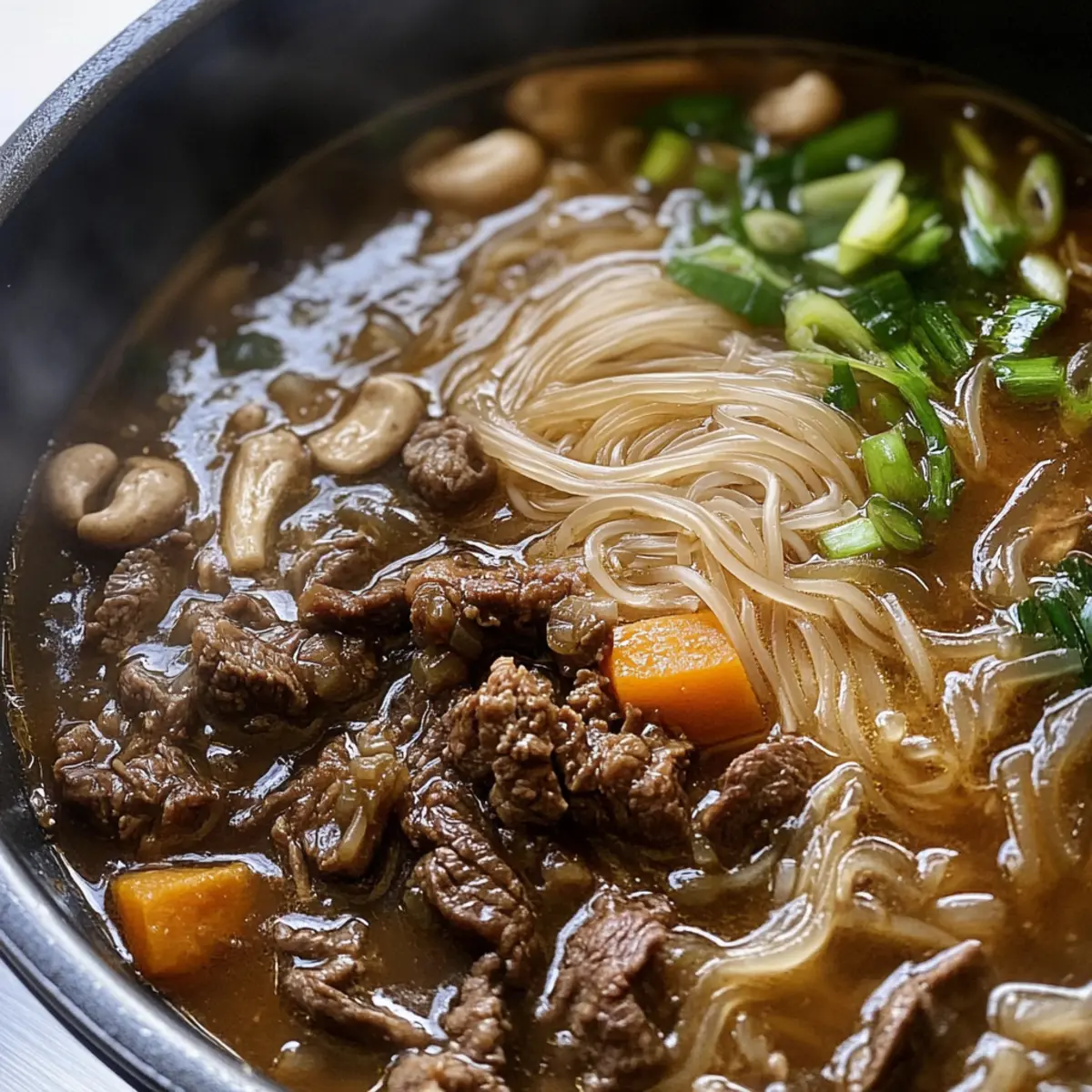
Why is Korean Beef Bulgogi Stew Irresistible?
Quick and Easy: This one-pot meal is a lifesaver, perfect for busy weeknights when you crave a comforting dinner without the hassle.
Flavor Explosion: The blend of savory bulgogi and rich broth creates a deeply satisfying dish that warms the soul.
Flexible Ingredients: Feel free to customize with noodles or vegetables—try adding bok choy or replacing glass noodles with rice noodles for a whole new experience!
Comfort Food Heaven: Each bite features tender beef, chewy noodles, and earthy mushrooms, making it a feast for your senses.
Waste Not, Want Not: A fantastic way to creatively use leftovers, turning yesterday’s meal into today’s hug-in-a-bowl. Channel your inner chef with this stew and impress your loved ones!
Korean Beef Bulgogi Stew Ingredients
For the Stew
• Korean Beef Bulgogi – This adds a sweet-savory note to the stew and infuses the broth with richness; fresh marinated beef is a great substitute if leftovers are not available.
• Sweet Potato Glass Noodles – These provide a chewy texture and absorb the flavorful broth well; you can use rice noodles, udon, or ramen if preferred.
• Enoki Mushrooms – They offer subtle earthiness and a tender-crisp texture that nicely complements the savory broth.
• Green Onion – Adds a fresh, mildly oniony flavor as a garnish; it brightens up the dish beautifully!
• Water – This forms the base of the broth and can be substituted with beef stock for a richer taste.
• Sesame Oil – Adds a nutty richness, crucial for achieving that authentic flavor in your Korean Beef Bulgogi Stew.
• Dark Soy Sauce – Provides umami and balances the sweetness and saltiness in the stew, enhancing its overall flavor.
Optional Toppings
• Fresh Cilantro – It adds a refreshing burst of flavor and a pop of color; perfect for those who enjoy a herbal touch!
• Chili Flakes – For a hint of heat, sprinkle them on top just before serving to take the dish up a notch.
Step‑by‑Step Instructions for Korean Beef Bulgogi Stew
Step 1: Soak the Noodles
Begin by soaking your sweet potato glass noodles in a large bowl of warm water for about 20 minutes or until they become flexible. This rehydration step is essential as it allows them to absorb the flavors of the broth when added to the Korean Beef Bulgogi Stew later. Keep them aside until you’re ready to incorporate them into the dish.
Step 2: Heat the Bulgogi
In a medium pot, heat over medium heat, adding your leftover beef bulgogi. Stir-fry it for about 5 minutes until it warms through and slight browning occurs, enhancing the dish’s flavor. This step ensures that the beef releases its savory notes, making your stew even more delicious.
Step 3: Add the Flavors
Once the bulgogi is heated, drizzle in the dark soy sauce and sesame oil, stirring well to combine. Allow these ingredients to meld together for about 2 minutes, during which the aromas will fill your kitchen. This will deepen the richness of your Korean Beef Bulgogi Stew, making it truly comforting.
Step 4: Create the Broth
Pour in 4 cups of water or beef stock, then bring the mixture to a gentle boil over medium-high heat. Keep an eye on it, as this should take about 5 minutes. The broth should start bubbling nicely, signaling that it’s time to incorporate the noodles and mushrooms for added depth of flavor.
Step 5: Incorporate the Noodles and Mushrooms
Once boiling, carefully add the soaked sweet potato glass noodles and enoki mushrooms to the pot. Stir gently and let it cook for an additional 2-3 minutes, or until the noodles turn tender yet chewy. This quick cooking will ensure the mushrooms remain slightly crisp while infusing the stew with their earthy flavor.
Step 6: Final Touches
After cooking the noodles, check that they’ve absorbed the savory broth, then remove the pot from heat. Ladle your Korean Beef Bulgogi Stew into bowls, noting that the noodles should be delightfully slippery, and the beef tender.
Step 7: Garnish and Serve
Finally, garnish your comforting stew with chopped green onions for a burst of freshness and color. Serve the Korean Beef Bulgogi Stew hot, and enjoy it alongside steamed rice or traditional Korean side dishes like kimchi for the perfect cozy night in!
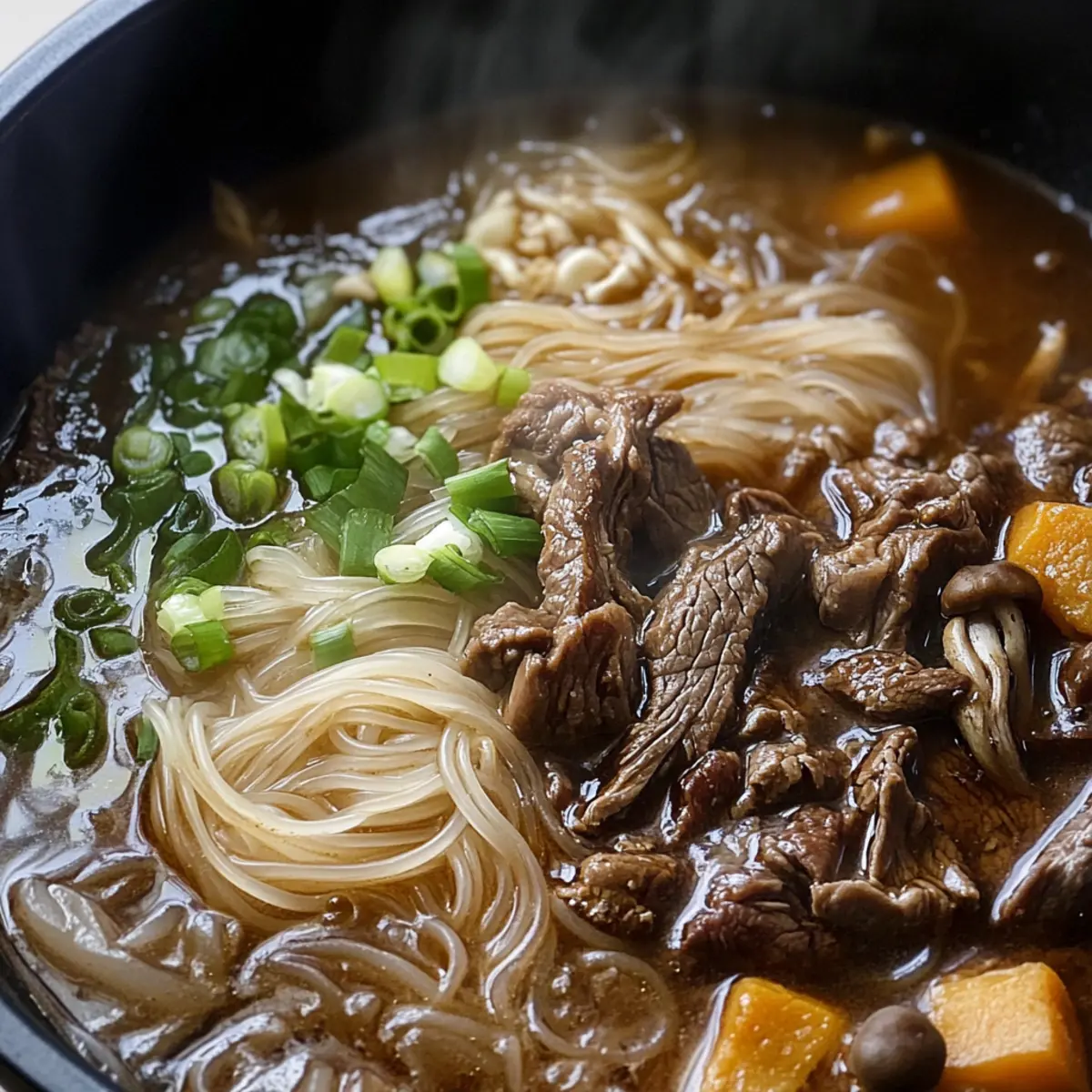
What to Serve with Quick Korean Beef Bulgogi Stew?
Transform your cozy dinner into a feast by adding delightful accompaniments that enhance the warm flavors of this comforting dish.
-
Steamed Jasmine Rice: This fluffy rice acts as a perfect canvas for soaking up the rich broth, balancing the bold flavors beautifully.
-
Korean Kimchi: The tangy, fermented notes of kimchi add a delightful contrast to the stew, elevating the overall dining experience with its crunchy texture.
-
Pickled Vegetables: Bright and tangy pickled cucumbers or radishes offer a refreshing crunch that contrasts with the savory stew, perfect for cleansing the palate.
-
Savory Pancakes (Pajeon): Serve alongside crispy pancakes loaded with green onions for a delightful texture variation that complements the stew’s warmth.
-
Fresh Herb Salad: A simple salad of lettuce, cilantro, and mint dressed with sesame oil can bring a burst of freshness and lightness to your meal, balancing the hearty stew.
-
Soju or Makgeolli: Pair your Korean Beef Bulgogi Stew with a glass of these traditional Korean drinks for the ultimate dining experience—a perfect way to enjoy your cozy night in!
Make Ahead Options
These Korean Beef Bulgogi Stew is perfect for meal prep enthusiasts! You can cook the bulgogi and prepare the broth base up to 24 hours in advance, storing each component in airtight containers in the refrigerator to maintain flavor. The sweet potato glass noodles can also be soaked ahead of time; just keep them covered in water and drain before using. When you’re ready to serve, simply reheat the bulgogi and broth mixture on the stovetop, then add the noodles and enoki mushrooms, cooking for a quick 2-3 minutes to achieve tender results. This approach not only saves you time but ensures that your stew remains just as delicious as when freshly made!
Expert Tips for Korean Beef Bulgogi Stew
-
Use Leftovers Wisely: Repurpose your leftover beef bulgogi for a delicious stew. This saves time and maximizes flavor.
-
Watch the Cooking Time: Avoid overcooking the sweet potato glass noodles; they should be chewy and absorb the broth without turning mushy.
-
Substitution Flexibility: If you’re out of glass noodles, swap in rice noodles or udon for a different texture that still complements the Korean Beef Bulgogi Stew.
-
Add Fresh Vegetables: Boost nutrition and flavor by including fresh vegetables like bok choy or carrots—these enhance the stew’s heartiness and color.
-
Flavor Boost: For a more robust taste, substitute water with beef stock; this elevates the overall richness of the stew’s broth.
Korean Beef Bulgogi Stew Variations
Feel free to explore these enticing variations and make this comforting stew your own!
-
Rice Noodles: Substitute sweet potato glass noodles with rice noodles for a different, delightful chewiness that pairs beautifully with the broth.
Imagine the comforting familiarity of rice noodles soaking in that rich, savory sauce! -
Extra Vegetables: Add bok choy, carrots, or napa cabbage for an extra boost of nutrition and flavor.
Each veggie adds a delightful crunch and a splash of color, enhancing both taste and presentation. -
Spicy Kick: Incorporate sliced jalapeños or a sprinkle of chili flakes to bring some heat to the dish.
The warmth from the chili beautifully complements the savory stew, elevating your cozy experience. -
Mushroom Medley: Mix in shiitake or portobello mushrooms for a heartier texture and deeper flavor profile.
The earthy notes of these mushrooms create a richer broth that feels like a warm embrace. -
Dairy-Free: Keep it dairy-free by using vegetable stock instead of beef stock for a lighter twist.
This alternative still maintains the essence of comfort while catering to various diets! -
Gluten-Free: Swap dark soy sauce with tamari to cater to gluten-free diners without sacrificing flavor.
Tamari brings the umami richness you crave, ensuring everyone can enjoy the stew together. -
Herb Infusion: Stir in fresh cilantro or basil just before serving for a burst of freshness.
Their vibrant flavors will brighten up the stew, making every spoonful a refreshing experience.
For added culinary inspiration, take a look at my recipes for Korean Beef Sloppy or Garlic Butter Beef and Spinach Tortellini that nicely meld flavors in comforting ways!
How to Store and Freeze Korean Beef Bulgogi Stew
Fridge: Store your Korean Beef Bulgogi Stew in an airtight container in the refrigerator for up to 3 days. Allow it to cool before sealing to maintain freshness.
Freezer: For longer storage, freeze the stew in individual portions in airtight bags for up to 2 months. This way, you can enjoy a quick and comforting meal anytime!
Reheating: When ready to enjoy, thaw in the fridge overnight. Reheat gently on the stovetop until warmed through, stirring occasionally to ensure even heat distribution.
Serving: Add a splash of water or broth while reheating if the stew thickens too much after freezing. This keeps your Korean Beef Bulgogi Stew deliciously hearty and ready to serve!
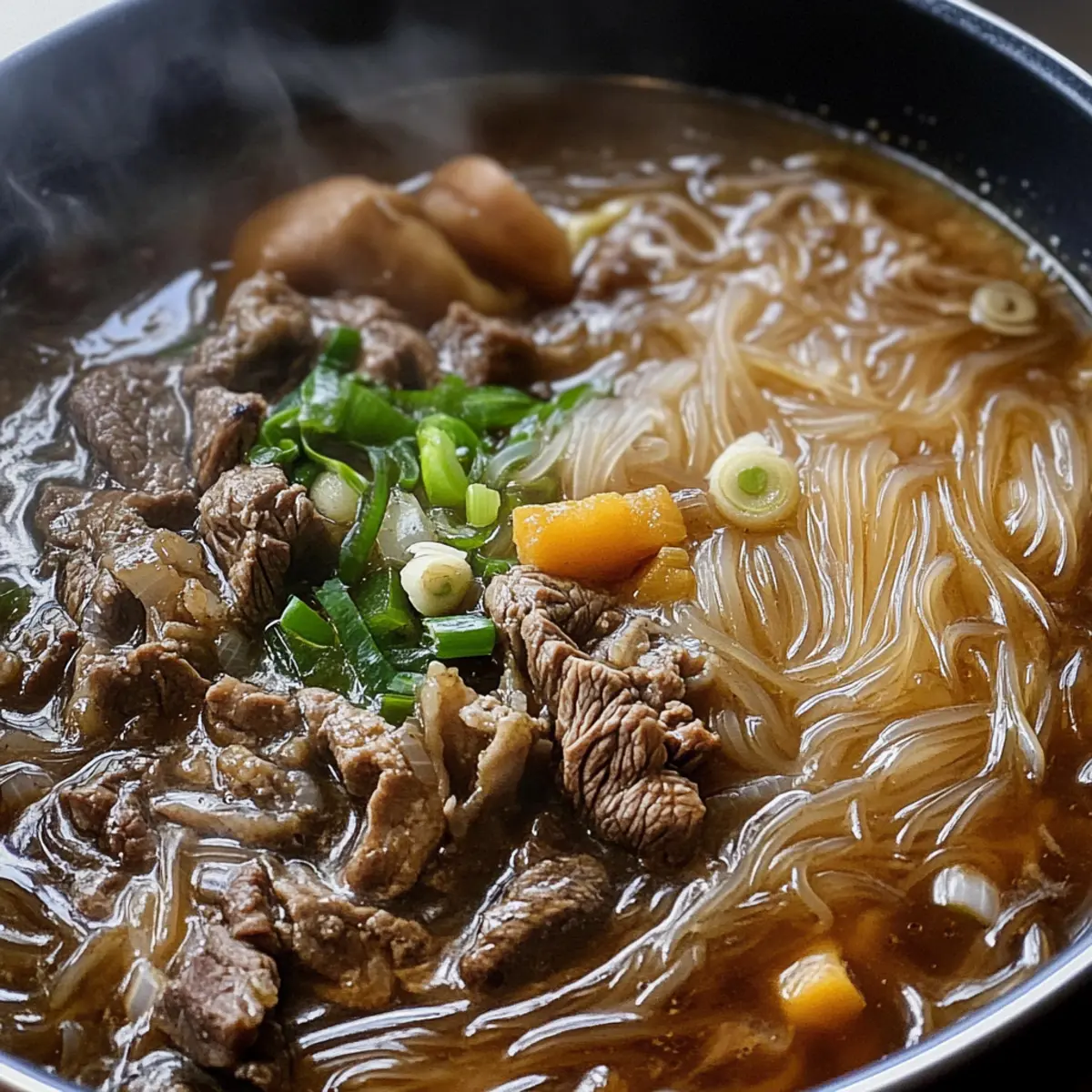
Korean Beef Bulgogi Stew Recipe FAQs
What type of beef should I use for the bulgogi?
Absolutely! For bulgogi, tender cuts like sirloin or ribeye are ideal due to their marbling, which adds flavor and tenderness. If you’re using leftovers, ensure they’re well-marinated for the best taste, or if fresh, marinate them in a mixture of soy sauce, sugar, garlic, and sesame oil before cooking.
How should I store leftover Korean Beef Bulgogi Stew?
To store, let the stew cool down before transferring it to an airtight container. It’ll keep well in the refrigerator for up to 3 days. Just ensure it’s sealed tightly to prevent any off-flavors from other foods in your fridge.
Can I freeze Korean Beef Bulgogi Stew?
Definitely! You can freeze the stew in airtight containers or freezer bags. Be sure to portion it out; it can last for up to 2 months in the freezer. When you’re ready to eat, simply thaw it in the fridge overnight and reheat on the stove until heated through. If it thickens too much, you can add a little water or broth while reheating.
What if I don’t have sweet potato glass noodles?
No worries at all! If sweet potato glass noodles aren’t available, you can substitute them with rice noodles, udon, or ramen. Just be mindful of the cooking times; you want them to remain chewy and not overcooked.
Are there any dietary considerations for this stew?
Very! This Korean Beef Bulgogi Stew can be made gluten-free by using gluten-free soy sauce. For allergies, always check the labels on your sesame oil and soy sauce. If you’re catering to a vegetarian diet, consider using tofu or mushrooms instead of beef.
What vegetables can I add to the stew?
Feel free to bulk up your stew with fresh vegetables! Adding bok choy, carrots, or napa cabbage not only enhances the nutrition profile but also adds delightful flavors and textures. Simply chop them up and toss them in the pot when you add the noodles to allow them to soften without losing their crunch.
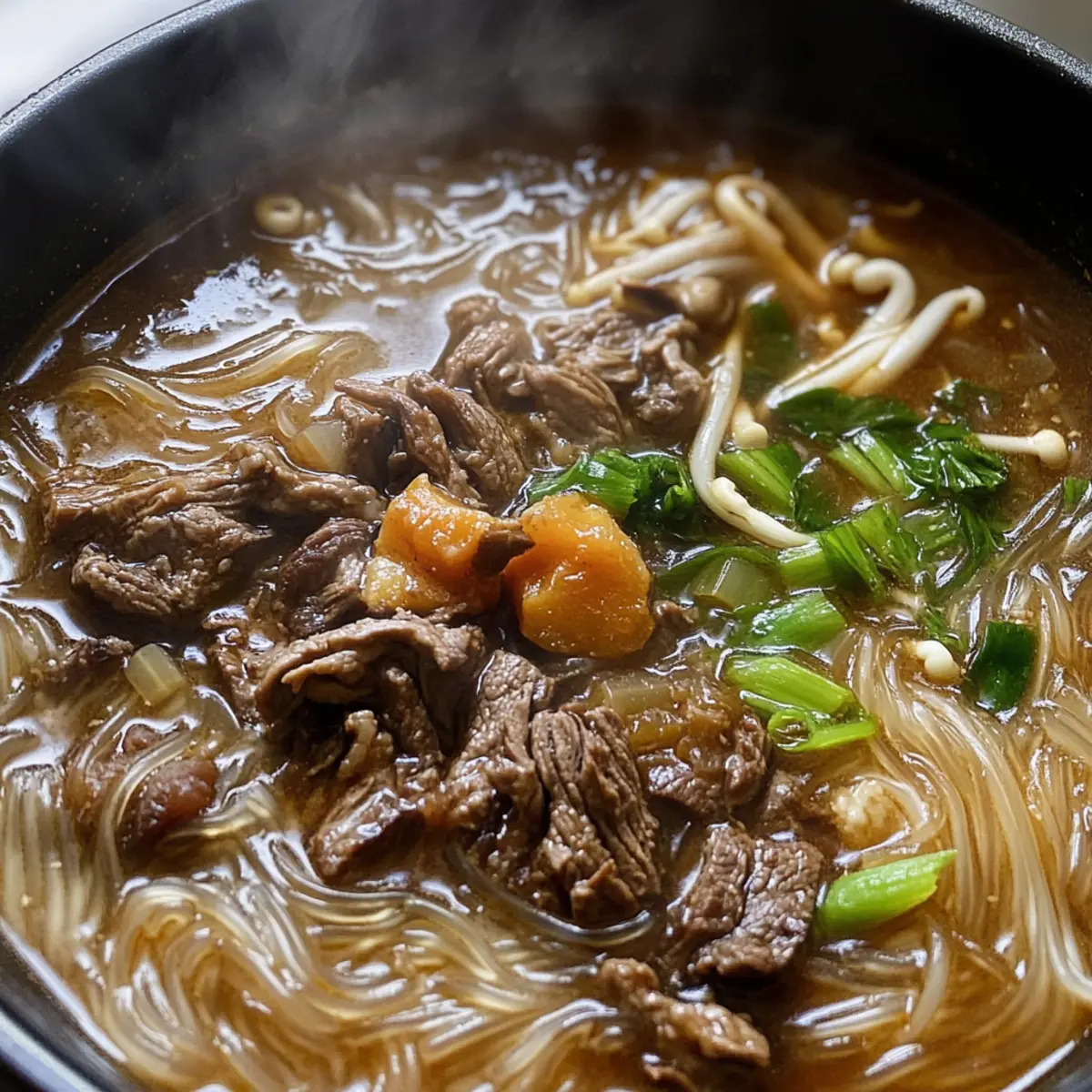
Savor Korean Beef Bulgogi Stew for a Cozy Night In
Ingredients
Equipment
Method
- Soak the sweet potato glass noodles in a large bowl of warm water for about 20 minutes until flexible.
- In a medium pot, heat leftover beef bulgogi over medium heat, stir-frying for about 5 minutes until warm and browned.
- Drizzle in dark soy sauce and sesame oil, stirring to combine and allowing to meld for about 2 minutes.
- Pour in 4 cups of water or beef stock, bringing to a gentle boil over medium-high heat for about 5 minutes.
- Add the soaked sweet potato glass noodles and enoki mushrooms to the pot and cook for an additional 2-3 minutes.
- Remove from heat once the noodles are tender, and ladle the stew into bowls.
- Garnish with chopped green onions before serving hot, alongside rice or kimchi.
Leave a Reply