
As I stood in my kitchen, the enticing aroma of frying chicken whisked me back to my favorite Japanese eatery, where the crunch of perfectly fried Katsu stole my heart. Today, I’m thrilled to share my take on Japanese Katsu Bowls with Tonkatsu Sauce—a comforting meal that’s a breeze to whip up. Picture crispy chicken layered over fluffy rice, adorned with a rainbow of fresh veggies and drizzled with a tangy, homemade sauce. This dish not only satisfies cravings but also fits effortlessly into your busy weeknight routine. Plus, you can make it gluten-free or switch things up with delicious tofu or eggplant for a vegetarian twist! Curious how you can bring this delightful taste of Japan to your home? Let’s dive into the recipe!
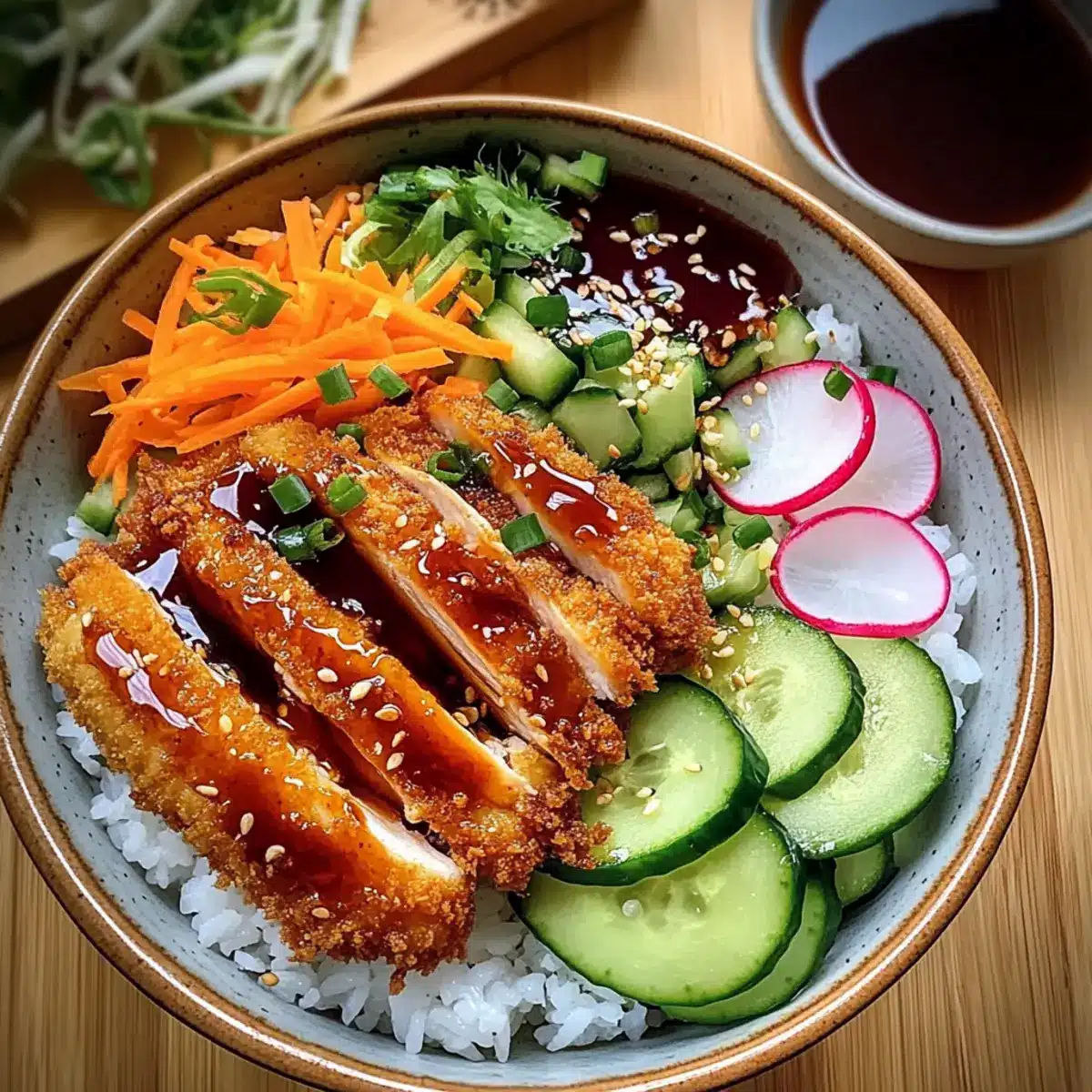
Why are these Katsu Bowls irresistible?
Comforting, familiar flavors: These Japanese Katsu Bowls blend crunchy, golden chicken with hearty rice for a homey meal that warms the soul.
Quick and easy: With straightforward steps, you can have this dinner ready in no time, making it perfect for busy weekdays.
Customizable options: Switch to tofu or eggplant for delightful vegetarian variations, or try using gluten-free flour for a tailored meal.
Vibrant colors: Fresh vegetables like cabbage and cucumber not only add a crunch but also bring a burst of color to your plate.
Satisfying crunch: The crispy panko coating paired with the tangy tonkatsu sauce creates an addictive texture that will keep you coming back for more!
For a refreshing side, consider pairing your bowl with miso soup or serve it alongside some crispy Tofu Katsu Plant for extra flavor!
Japanese Katsu Bowls Ingredients
• Discover the essentials for amazing katsu bowls!
For the Chicken
- Chicken Breasts – Use boneless, skinless for easy cooking and tender bites.
- Salt and Black Pepper – Essential for enhancing the flavor; adjust to your taste.
- All-Purpose Flour – This helps create a golden crust; swap for gluten-free flour if needed.
- Eggs – They work as a binding agent; for a vegan twist, try a flax egg instead.
- Panko Breadcrumbs – These give you that signature crispiness; gluten-free panko works too!
- Vegetable Oil – Used for frying; canola or peanut oil is a suitable substitute.
For the Tonkatsu Sauce
- Ketchup – Adds a touch of sweetness; opt for a low-sugar version for a healthier choice.
- Worcestershire Sauce – Brings umami depth; choose gluten-free if necessary.
- Soy Sauce – Delivers a rich salty flavor; Tamari can be used for a gluten-free alternative.
- Sugar – Balances the acidity of the ketchup; you can reduce or replace with honey.
- Mirin – Sweetens the sauce; in a pinch, sugar mixed with water works great.
- Dijon Mustard – Adds a tangy kick; feel free to swap it for your favorite mustard.
- Garlic Powder – Enhances overall flavor; fresh garlic is a fantastic substitute.
For the Bowl
- Cooked White Rice – This serves as the hearty base; short-grain rice creates the perfect texture.
- Shredded Cabbage, Sliced Cucumber, Sliced Radishes, Sliced Carrots – Provide freshness and vibrant color; feel free to mix in any seasonal vegetables you like.
- Green Onions and Sesame Seeds – Wonderful garnishes that elevate the dish with flavor and visual appeal.
Now you have all the key ingredients for crafting your delightful Japanese Katsu Bowls with Tonkatsu Sauce—it’s time to get cooking!
Step‑by‑Step Instructions for Japanese Katsu Bowls with Tonkatsu Sauce
Step 1: Prepare Chicken
Begin by placing the chicken breasts between two pieces of plastic wrap. Using a meat mallet, pound the chicken to an even thickness of about ½ inch to ensure even cooking. This step is crucial for the perfect crunch in your Japanese Katsu Bowls.
Step 2: Season
Generously season each side of the chicken breasts with salt and black pepper, ensuring a well-rounded flavor. The seasoning should enhance the dish without overpowering it, providing a tasty base beneath the crispy coating.
Step 3: Breading Station Setup
Set up your breading station by placing three bowls on your countertop. Fill the first bowl with all-purpose flour, the second with beaten eggs, and the third with panko breadcrumbs. This organized setup will streamline the breading process for your Chicken Katsu.
Step 4: Coat the Chicken
Start coating the chicken by dredging each breast in the flour, shaking off any excess. Next, dip it into the beaten eggs, allowing the excess to drip back into the bowl, and finally, press it into the panko, ensuring an even layer for that delicious crunch.
Step 5: Fry the Chicken
In a large frying pan, heat about ½ inch of vegetable oil over medium heat until shimmering, roughly 350°F. Carefully add the breaded chicken breasts, frying for 4-5 minutes on each side or until they are golden brown and cooked through, reaching an internal temperature of 165°F.
Step 6: Make Tonkatsu Sauce
While the chicken is frying, whisk together the tonkatsu sauce by combining ketchup, Worcestershire sauce, soy sauce, sugar, mirin, Dijon mustard, and garlic powder in a bowl. Mix until smooth, adjusting any flavors to your preference for the perfect complement to your Katsu Bowls.
Step 7: Assemble the Bowls
Once the chicken is done, transfer it to a paper towel-lined plate to drain excess oil. Slice the cooked chicken into strips and prepare your serving bowls by layering cooked white rice at the base, artfully arranging the sliced chicken atop the rice along with shredded cabbage, cucumber, radishes, and carrots.
Step 8: Finish
Generously drizzle your homemade tonkatsu sauce over the assembled chicken and veggies. Top the bowls with sliced green onions and a sprinkle of sesame seeds for an added touch of flavor and a delightful finish to your Japanese Katsu Bowls with Tonkatsu Sauce.
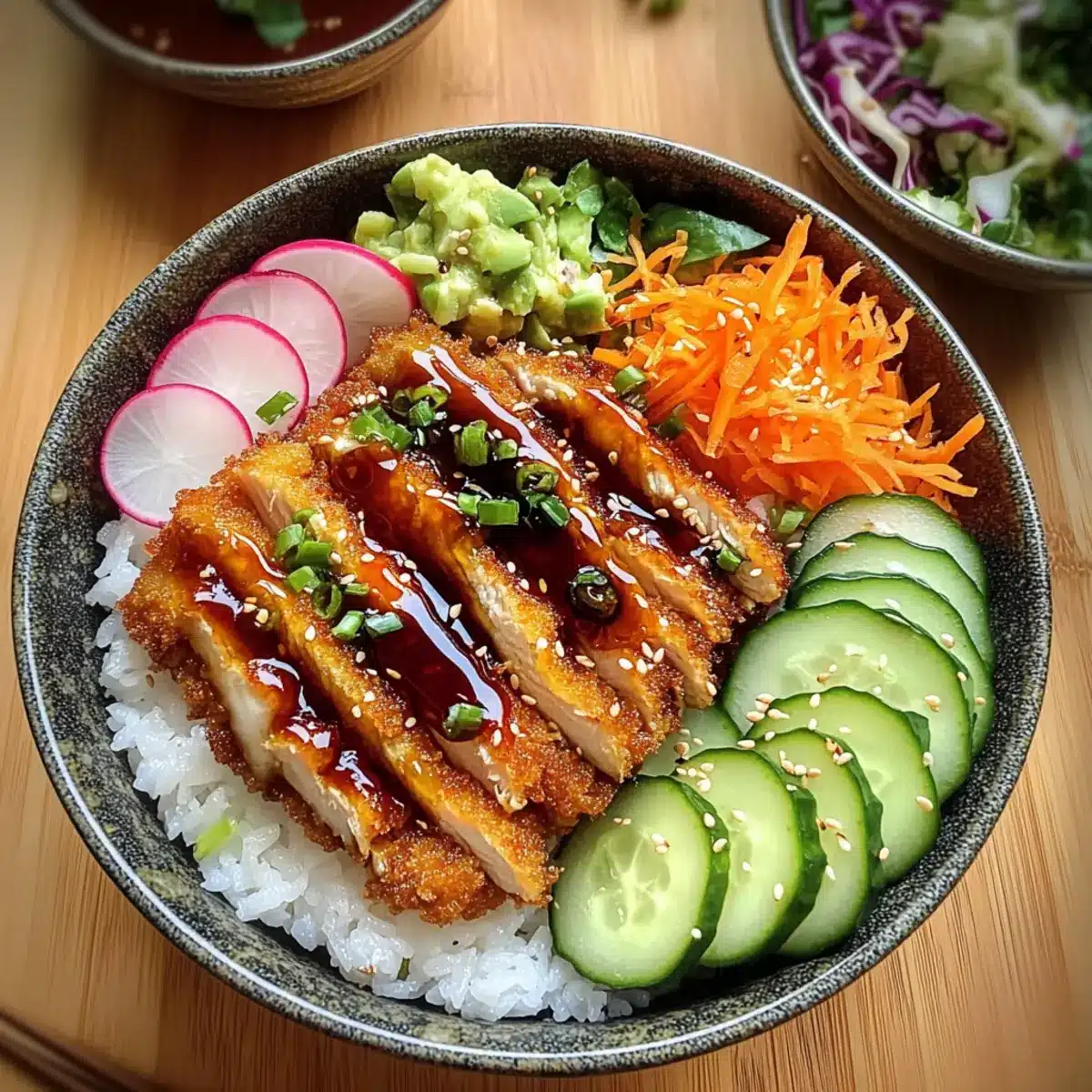
What to Serve with Japanese Katsu Bowls with Tonkatsu Sauce
Transform your delightful katsu bowls into a complete meal with these perfectly paired accompaniments that tickle your taste buds.
- Miso Soup: This warm, savory broth is a comforting start to the meal, seamlessly balancing your katsu’s crunch with its umami-rich flavors.
- Edamame Hummus: Creamy, textured and bursting with flavor, this spread adds a healthy twist and pairs wonderfully with crispy bread or fresh veggies for dipping.
- Pickled Vegetables (Tsukemono): These bright, tangy bites bring a refreshing crunch that perfectly contrasts the richness of the katsu.
- Japanese Potato Salad: Creamy and slightly sweet, this salad offers a delightful twist to the meal with its tender potatoes and crunchy vegetables.
- Cucumber Salad: Tossed in a simple soy sauce, rice vinegar, and sesame oil dressing, this cool and crisp salad enhances any bites of katsu with its refreshing crunch.
- Green Tea: Sipping this light, aromatic drink will cleanse your palate, wrapping your dining experience in a warm, comforting embrace.
- Tempura Vegetables: Light and airy, tempura is a deliciously crispy side that harmonizes beautifully with the textures of your katsu bowls.
- Shrimp Gyoza: Juicy and filled with flavor, these dumplings are a fun addition, making for an irresistible duo alongside your comforting katsu meal.
- Chocolate Mochi: End your dining on a sweet note with these chewy treats that offer delightful bites of rich chocolate, complementing the savory flavors perfectly.
Make Ahead Options
These Japanese Katsu Bowls with Tonkatsu Sauce are perfect for busy home cooks looking to save time! You can bread the chicken up to 24 hours in advance; just keep the coated chicken in an airtight container in the refrigerator to maintain its freshness and prevent sogginess. The tonkatsu sauce can also be prepared up to a week ahead—store it in a sealed jar in the fridge for easy access. When you’re ready to serve, simply fry the chicken, reheat the sauce, and assemble the bowls with cooked rice and fresh veggies. This way, you can enjoy a homemade meal without the hassle on busy weeknights!
How to Store and Freeze Japanese Katsu Bowls
Fridge: Keep leftover Japanese Katsu Bowls in an airtight container for up to 3 days. Store the chicken katsu separately from the vegetables and rice to maintain crispiness.
Freezer: For longer storage, freeze the cooked chicken katsu in a single layer on a baking sheet, then transfer to an airtight container or freezer bag. It can be frozen for up to 2 months.
Reheating: To reheat, place the chicken katsu in the oven or air fryer for a few minutes until crisp again, rather than using a microwave to avoid sogginess.
Tonkatsu Sauce: Store any remaining tonkatsu sauce in the fridge for up to two weeks in a sealed container.
Japanese Katsu Bowls with Tonkatsu Sauce Variations
Feel free to explore these fun variations and substitutions to make the recipe your own!
-
Pork Katsu: Swap chicken for thinly sliced pork for a traditional twist on this classic dish. The rich flavor pairs beautifully with the tonkatsu sauce.
-
Tofu Delight: Use firm tofu instead of chicken for a delightful vegetarian option. Simply press the tofu and follow the same breading process for crunchy goodness.
-
Eggplant Swap: For a unique take, bread and fry sliced eggplant for a delicious, hearty vegetarian dish that absorbs the tangy sauce beautifully.
-
Seasonal Veggies: Switch up the veggies based on what’s fresh at the market or what you have on hand—bell peppers, snap peas, or even radish sprouts work wonderfully!
-
Spicy Tonkatsu Sauce: Add a pinch of chili flakes or sriracha to your tonkatsu sauce to bring some heat and excitement to the dish. This is a great way to satisfy those spicy cravings!
-
Brown Rice Bowl: For a nutritious twist, use brown rice instead of white. It offers nuttier flavors and pairs nicely with the crispy katsu and fresh veggies.
-
Sweet and Sour: Experiment with the sauce by adding a splash of pineapple juice or even a bit of hoisin sauce for a sweet and sour variation that’s delectable!
-
Vegan Katsu: Use a mixture of chickpea flour and water as a binding agent instead of eggs to make a completely plant-based katsu experience—perfect for vegan dietary needs!
With these vibrant variations, your Japanese Katsu Bowls are sure to delight your palate in new and exciting ways! For that perfect touch, consider a drizzle of Peppercorn Sauce Transforms to add depth to your dish.
Expert Tips for Japanese Katsu Bowls
- Perfectly Cooked Chicken: Ensure the chicken reaches an internal temperature of 165°F for safety and optimal tenderness. Use a meat thermometer for accuracy.
- Crispy Breading: Let the breaded chicken rest for a few minutes before frying. This helps the panko adhere better and fry up crispier in your Japanese Katsu Bowls.
- Oil Temperature Matters: Monitor the oil heat closely; too high will burn the breadcrumbs, while too low will make them greasy. Keep it at around 350°F for the best results.
- Customize Your Sauce: Adjust the tonkatsu sauce ingredients based on personal taste. More ketchup will sweeten it, while extra Worcestershire adds depth—experiment to get your perfect balance!
- Fresh Veggie Swaps: Feel free to mix and match the vegetables according to what’s in season or your personal favorites for a vibrant touch in your katsu bowls.
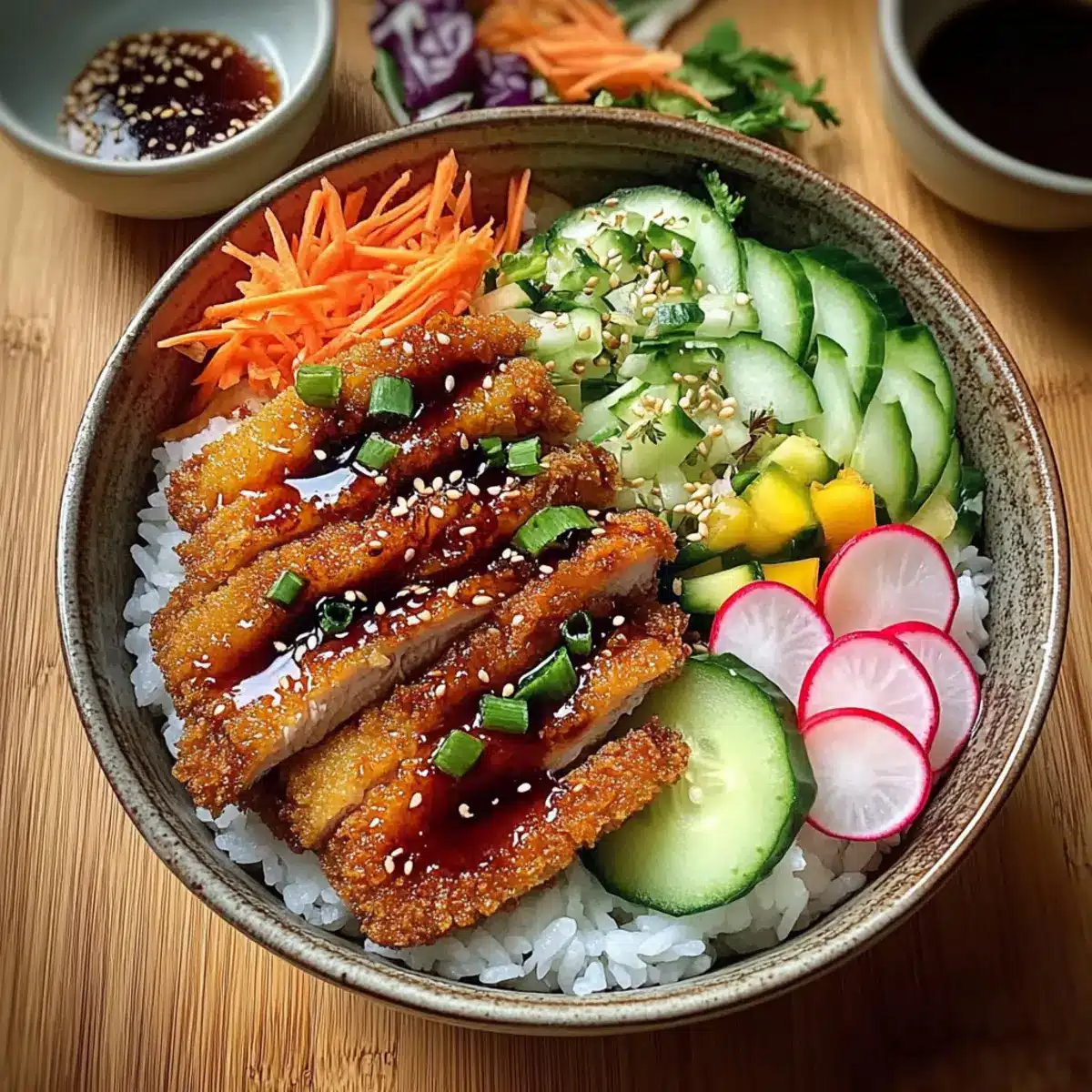
Japanese Katsu Bowls with Tonkatsu Sauce Recipe FAQs
What’s the best way to select chicken breasts for this recipe?
Absolutely! Look for boneless, skinless chicken breasts that are plump and firm. Avoid any with dark spots or a strong odor as these can indicate spoilage. If you can, opt for organic or free-range options for enhanced flavor and quality.
How should I store leftover katsu bowls, and for how long?
Very! Place leftover Japanese Katsu Bowls in an airtight container and store them in the fridge. They will stay fresh for up to 3 days. For the best texture, keep the chicken katsu separate from the rice and vegetables to prevent sogginess.
Can I freeze the chicken katsu, and what’s the best method?
I often make extra and freeze it! First, cool the cooked chicken katsu completely. Then, lay the pieces in a single layer on a parchment-lined baking sheet to freeze until solid. Once frozen, transfer them to an airtight container or freezer bag. They’ll keep well for up to 2 months. When you’re ready to enjoy, just reheat in the oven or air fryer for that perfect crispness again!
What should I do if the breading turns out soggy?
No problem! This can happen if the oil temperature is too low or if the chicken is not thoroughly dried before breading. Next time, make sure your oil is hot enough (around 350°F), and pat the chicken breasts dry with paper towels before seasoning and breading.
Is tonkatsu sauce safe for those with gluten allergies?
Definitely! Just be sure to use gluten-free soy sauce and Worcestershire sauce when making your tonkatsu sauce. Many brands offer gluten-free versions without compromising taste, so you can easily enjoy this recipe worry-free!
Can I use different vegetables in my katsu bowls?
Absolutely! Feel free to swap or add vegetables according to your preference or what’s in season. Bell peppers, snap peas, or even sautéed mushrooms can make delightful additions for both color and flavor while keeping the dish exciting!
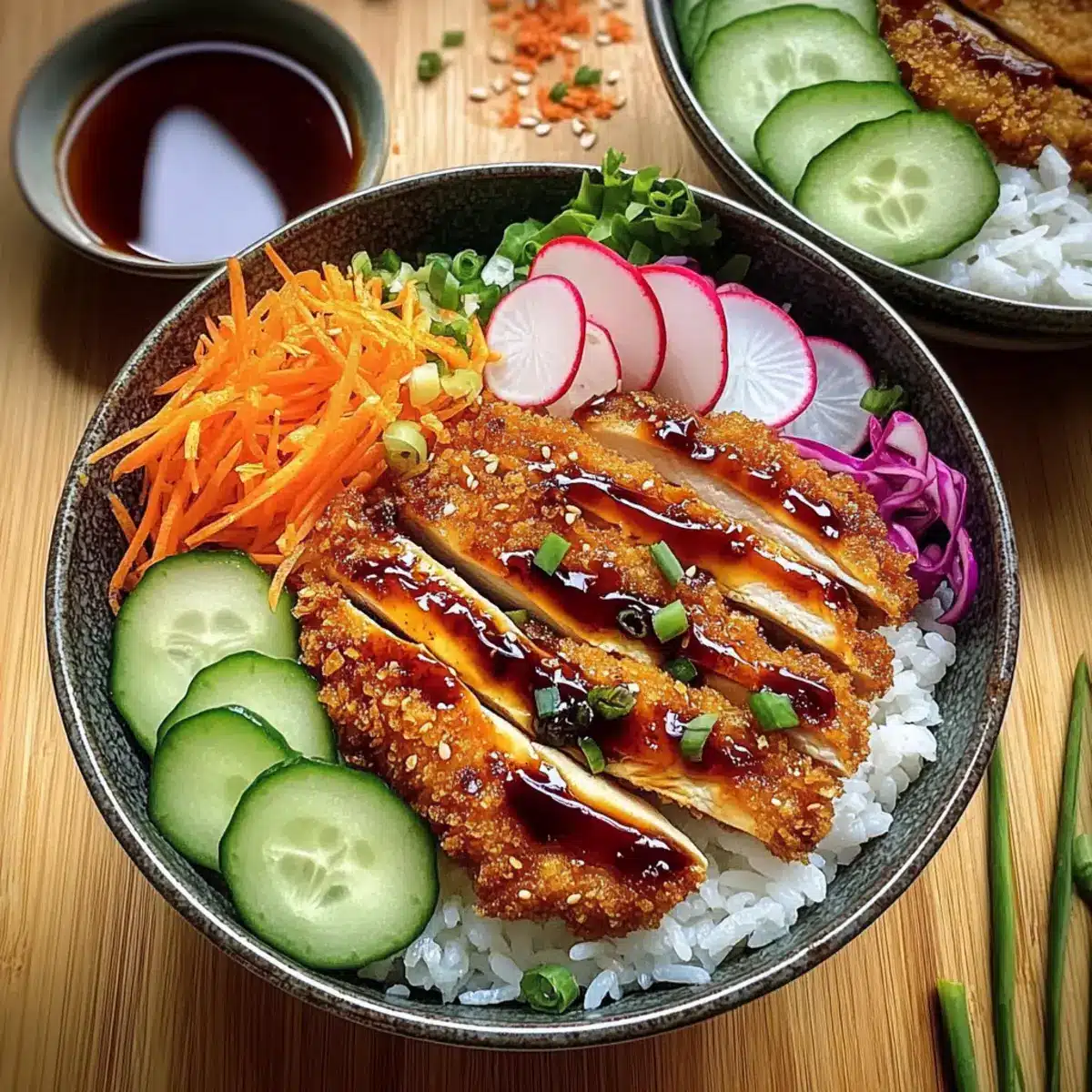
Crispy Japanese Katsu Bowls with Tangy Tonkatsu Sauce
Ingredients
Equipment
Method
- Place chicken breasts between plastic wrap and pound to an even thickness of about ½ inch.
- Season both sides of chicken breasts with salt and black pepper.
- Set up a breading station with flour, beaten eggs, and panko breadcrumbs in separate bowls.
- Dredge chicken in flour, dip in egg, then coat with panko breadcrumbs.
- Heat vegetable oil in a pan over medium heat and fry chicken for 4-5 minutes on each side until golden brown.
- In a bowl, whisk together the ingredients for the tonkatsu sauce until smooth.
- Transfer cooked chicken to a paper towel-lined plate, slice, and assemble bowls with rice, chicken, and veggies.
- Drizzle tonkatsu sauce over the bowls and garnish with green onions and sesame seeds.
Leave a Reply